Is Yield Farming Still Safe in 2026? What Has Changed for DeFi Investors

Yield farming once defined the promising growth of decentralized finance (DeFi). In 2026, the strategy remains a cornerstone of DeFi, but the risks and expectations have changed dramatically.
For investors asking, “Is yield farming still safe in 2026?” the answer is less straightforward than it was during the DeFi boom of 2020–2021. The industry has matured, but so have the threats, from smart contract exploits to shifting liquidity dynamics across protocols.
Yield farming still offers attractive returns. Yet the days of effortless triple-digit yields are largely gone, replaced by a more competitive and risk-sensitive market.
DeFi’s Yield Engine Looks Very Different Today
Yield farming refers to locking crypto assets in decentralized protocols to earn rewards, typically through liquidity provision, staking incentives, or governance token distributions.
In the early DeFi era, investors chased aggressive incentives from new protocols eager to bootstrap liquidity. That model fueled massive capital inflows but also created fragile ecosystems dependent on token emissions.
By 2026, the space will have significantly shifted.
Many leading protocols now prioritize sustainable yields rather than short-term liquidity mining campaigns. Platforms such as Aave DAO, Yearn Finance DAO, PancakeSwap DAO, and Uniswap DAO have redesigned their reward structures to reduce inflationary token payouts.
As a result, yields across major DeFi platforms have normalized.
On leading Ethereum-based liquidity pools, annual percentage yields often hover between 5% and 20%, depending on market conditions and trading activity. Higher yields still exist on emerging chains and experimental protocols, but they typically carry elevated smart contract and liquidity risks.
For investors, the trade-off is clearer than ever: stability versus outsized returns.
Liquidity Is Consolidating Around Trusted Protocols
One of the biggest changes in DeFi over the past few years is liquidity concentration.
During the early yield farming boom, capital rapidly jumped between new protocols chasing temporary incentives. Today, liquidity tends to cluster around well-audited and battle-tested platforms.
Institutional participation has significantly accelerated this trend.
Crypto hedge funds, market makers, and treasury managers increasingly deploy capital in DeFi strategies that resemble traditional yield products. These participants prioritize risk management, contract security, and predictable returns.
That shift has pushed billions in liquidity toward established protocols with long track records rather than newly launched farms promising aggressive rewards.
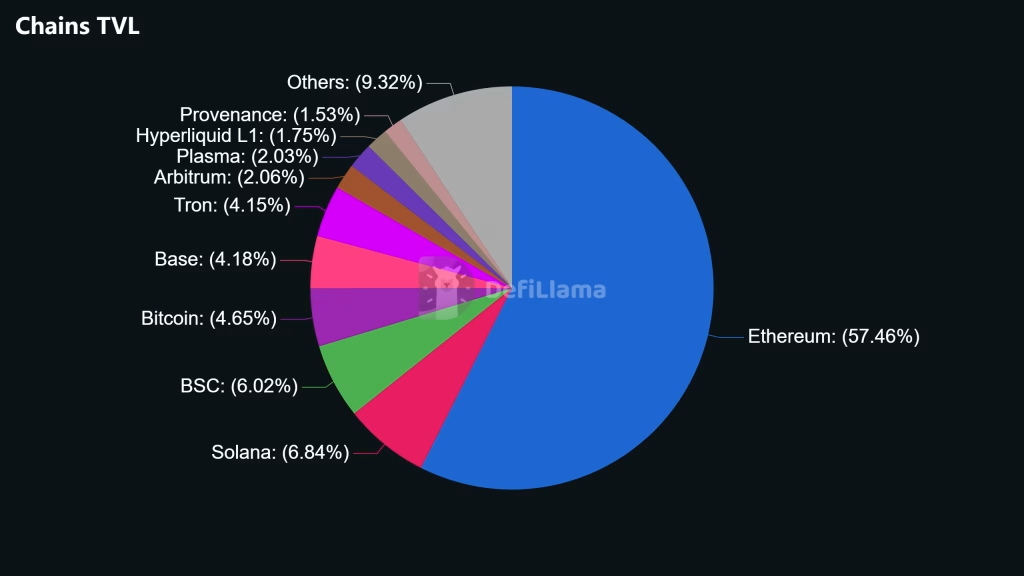
Total value locked (TVL) across DeFi remains substantial, hovering near $90–$120 billion depending on market conditions. However, a large portion of that capital now sits in fewer, larger platforms.
The era of endless experimental yield farms dominating the market appears to be fading.
Regulation Is Quietly Reshaping DeFi Incentives
Another major factor affecting yield farming safety is the evolving regulatory environment.
Global regulators have increasingly turned their attention toward DeFi protocols offering yield-generating products that resemble interest-bearing financial services. While fully decentralized platforms remain difficult to regulate directly, developers and front-end operators face growing scrutiny.
This pressure has already transformed parts of the ecosystem.
Some protocols have reduced token incentives to avoid regulatory concerns around securities issuance. Others have introduced more transparent governance structures and risk management frameworks.
Institutional investors entering DeFi also demand greater compliance visibility before deploying large pools of capital. The result is a more measured DeFi market where yield strategies are designed with longevity in mind rather than rapid growth.
Security Risks Still Define the Yield Farming Debate
Despite the industry’s maturity, security remains the single largest risk for yield farmers.
Smart contract exploits continue to drain hundreds of millions of dollars from DeFi each year. Flash-loan attacks, oracle manipulation, and poorly audited contracts remain common vulnerabilities.
Even well-established protocols occasionally face unexpected bugs or governance attacks.
For investors evaluating whether yield farming is safe in 2026, the key variable is still contract risk.
Security audits, bug bounty programs, and insurance mechanisms have improved significantly across major platforms. Yet the decentralized nature of DeFi means risk can never be fully eliminated.
This reality has led many investors to diversify their yield strategies across multiple protocols rather than concentrating funds in a single farm.
Market Data Shows a More Mature Yield Space
The broader crypto market space also plays a major role in shaping yield opportunities.
During bullish cycles, trading activity across decentralized exchanges increases sharply. Higher trading volumes translate into stronger fee revenue for liquidity providers.
In contrast, quieter market conditions compress returns.
As of early 2026, the DeFi sector remains closely tied to overall crypto market sentiment. When Bitcoin and Ethereum rally, on-chain activity typically follows, boosting yields across liquidity pools and lending markets.
Ethereum’s price, for example, has hovered near $2,000 in recent weeks with a market capitalization above $248 billion, helping sustain healthy on-chain trading volumes.
Several DeFi governance tokens have also seen renewed interest as institutional capital flows back into on-chain yield strategies.
Still, most yields remain far below the triple-digit rates that defined the early DeFi era.
That change reflects a maturing market where sustainability increasingly outweighs speculation.
A More Professional DeFi Market
Professional investors now treat yield farming less like a speculative game and more like a structured investment strategy.
Many funds actively rotate liquidity across lending markets, decentralized exchanges, and derivatives protocols to optimize returns while minimizing exposure to individual smart contracts.
Advanced analytics platforms track liquidity flows, protocol risk scores, and token emission schedules in real time, allowing traders to adjust strategies quickly.
This professionalization has made the ecosystem more efficient—but also more competitive.
For retail investors, finding attractive yields often requires deeper research than in the early days of DeFi.
What Investors Are Watching Next
The future of yield farming will likely be dictated by several emerging trends.
Protocol upgrades focused on real yield, returns generated from actual platform revenue rather than token emissions, are gaining traction across the ecosystem.
Meanwhile, the rapid expansion of liquid staking and restaking platforms is introducing new yield layers tied to blockchain security mechanisms.
If these models scale successfully, they could reshape how capital flows through DeFi.
Investors looking at yield farming in 2026 are less focused on chasing the highest returns and more concerned with a different question: which protocols can generate sustainable yield without introducing hidden risks.
About Author